You Are Not Alone
Pregnancy and the months after birth are often described as some of the happiest times in life. For many women, they are also some of the hardest. About 1 in 7 women experience depression during pregnancy or after delivery, according to the American Psychiatric Association.
Perinatal depression is not a personal failing, and it is not something you have to push through on your own. It is a serious medical condition, and it is treatable. For women who want to avoid or cannot tolerate medication, or who have not found relief with it, transcranial magnetic stimulation (TMS) offers another path forward.
What Is Perinatal Depression?
Perinatal (or peripartum) depression is depression that begins during pregnancy or after delivery. Postpartum depression refers specifically to depression that develops after the baby is born.
Common symptoms include:
- Persistent sadness, emptiness, or feeling numb
- Loss of interest in things you once enjoyed
- Changes in sleep or appetite beyond what a newborn schedule explains
- Fatigue and difficulty concentrating
- Feelings of worthlessness, guilt, or being a “bad mom”
- Crying often, sometimes without a clear reason
- Thoughts of death or suicide
Baby Blues or Something More?
Up to 85% of new mothers experience the “baby blues,” a short period of mood swings, tearfulness, and worry that usually fades within about two weeks and does not interfere with daily life.
Perinatal depression is different. It is more intense, it lasts longer, and it can make it hard to function, bond with your baby, or care for yourself. If symptoms last more than two weeks or keep getting worse, it is time to talk to a professional.
Why Treatment Decisions Can Feel Harder Right Now
Many women put off getting help during pregnancy or while breastfeeding because they are worried about how medication could affect their baby. Others have already tried antidepressants and did not get the relief they needed.
Those concerns are understandable, but going without treatment is not risk-free either. Untreated depression can affect a mother’s health, her pregnancy, and her early relationship with her baby. That is why it matters to know about every option available, including treatments that do not involve medication.
How TMS Works
TMS is a non-invasive treatment that uses targeted magnetic pulses to stimulate areas of the brain involved in mood regulation. It has been FDA-approved for the treatment of major depressive disorder since 2008.
Because TMS does not rely on medication, nothing circulates through the bloodstream. That means nothing reaches the baby during pregnancy or passes into breast milk. TMS also:
- Requires no anesthesia or sedation
- Lets you stay awake and alert during each session
- Allows you to drive yourself home and return to your day, including caring for your baby, right after treatment
What the Research Says
A growing body of research supports TMS as a safe and effective option during pregnancy and postpartum:
- A 2021 systematic review and meta-analysisfound that TMS significantly improved symptoms of peripartum depression, with no severe side effects reported in mothers or babies.
- In a randomized controlled trial of women in their second and third trimesters, TMS produced higher response and remission rates than a sham treatment, with no major adverse effects for mother or baby, as summarized by the MGH Center for Women’s Mental Health.
- In a multi-center study of women with postpartum depression, 14 of 19 participants reached remission with TMS alone.
- A 2024 case seriesfound that maintenance TMS throughout pregnancy and the first year postpartum helped women with a history of depression stay well.
- Researchers are now studying accelerated TMS for perinatal depression, which could shorten treatment for new and expecting mothers even further.
Much of the current research involves smaller studies, and larger trials are underway. So far, the findings have been consistently encouraging.
What TMS Looks Like for New and Expecting Moms
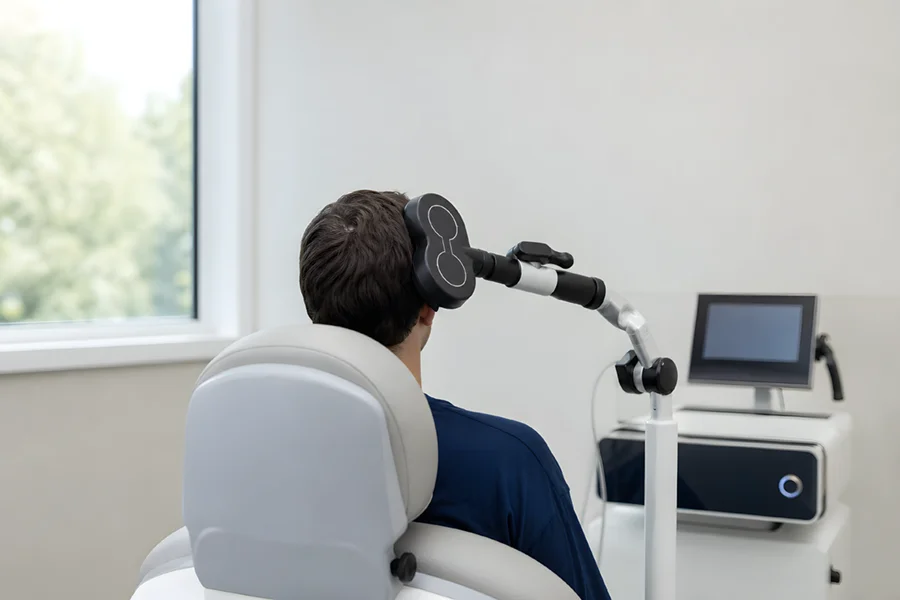
TMS is delivered in short, in-office sessions over several weeks. You sit in a comfortable chair, a small magnetic coil is placed against your head, and you feel a light tapping sensation during treatment. The most common side effects are mild scalp discomfort and headache, which are typically temporary.
During pregnancy, our team adjusts positioning as needed to keep you comfortable and safe. Our doctors will also coordinate with your OB-GYN or midwife, so your care team stays on the same page.
Standard TMS is often covered by insurance for major depressive disorder, and our team can help verify your benefits.
When to Reach Out
Consider scheduling an evaluation if:
- Your symptoms have lasted more than two weeks
- Depression is making it hard to care for yourself or your baby
- You have tried medication without enough relief
- You want a treatment option that does not involve medication
If you are having thoughts of harming yourself or your baby, call or text 988 or call 911 right away. You can also reach the National Maternal Mental Health Hotline 24/7 at 1-833-TLC-MAMA (1-833-852-6262).
Why Breakthru
Breakthru specializes in interventional psychiatry. Every patient begins with a comprehensive evaluation of 90 minutes to 2 hours, so our doctors can understand your full history and recommend the treatment most likely to help. You do not need a referral, and we have locations in Sandy Springs, Alpharetta, and Tucker.
Frequently Asked Questions
Is TMS safe during pregnancy?
Research to date shows TMS is well tolerated during pregnancy, with no reports of adverse obstetric outcomes linked to treatment. Because it does not involve medication, there is no drug exposure for the baby. Our doctors will review your history and coordinate with your OB-GYN.
Can I have TMS while breastfeeding?
Yes. TMS does not involve medication, so nothing passes into breast milk, and there is no need to pause breastfeeding or pump and discard milk.
Is TMS covered by insurance for postpartum depression?
Standard TMS is often covered for major depressive disorder when certain criteria are met. Our team can verify your benefits before you start.
How soon will I feel better?
Many patients begin noticing improvement around the fourth week of standard TMS, with continued gains through the end of treatment.
Can TMS be used alongside my current medication?
Yes. TMS can be used on its own or alongside medications prescribed by your current provider. Talk with your prescriber before making any changes to your medication.
My baby is older now. Is it too late to get help?
No. Depression that began during pregnancy or after birth can persist for months or even years. It is never too late to be evaluated and treated.
Do I need a referral?
No. You can schedule an evaluation directly with Breakthru.
Take the Next Step
You deserve to feel like yourself again. If you are ready to explore TMS for perinatal or postpartum depression, schedule a consultation, refer a patient, or call us at 470-231-2235.