Physician-led, interventional psychiatry experts
Transcranial Magnetic Stimulation (TMS)
Treatment for MDD, GAD and OCD
Non-invasive relief for depression and anxiety
For depression
Among patients treated, 93.9% experienced an improvement in their depression symptoms, with 42.4% achieving remission.
For patients starting with severe depression, 79.2% improved to mild or better.
For anxiety
Similarly, 87.9% of patients with anxiety showed improvement, with 42.4% achieving remission.
Transcranial magnetic stimulation (TMS) is a safe, noninvasive therapy that helps patients (ages 15+) with treatment-resistant depression. Experienced psychiatrist Karen Giles, MD, MS, at Breakthru Psychiatric Solutions in Sandy Springs and Alpharetta, Georgia, specializes in using cutting-edge treatments like TMS to treat long-term depression when nothing else is working. To learn how transcranial magnetic stimulation could benefit you, call Breakthru Psychiatric Solutions today or book an appointment online.
What is Transcranial Magnetic Stimulation?
Transcranial Magnetic Stimulation (TMS) is a clinically proven and FDA-cleared treatment for depression. TMS works by sending short magnetic pulses to target the affected area of the brain – stimulating and activating neural pathways so that the inactive signals begin firing and working again. In 2025, TMS was FDA-cleared as an adjunctive therapy for adolescents starting at age 15.
Depression can have a devastating impact on your life. The thoughts and feelings you experience are impossible to control or change without help, which for most people involves psychotherapy, medication, or both. While these treatments are effective for many people, others find that their symptoms fail to improve. If you’re in this position, TMS offers an effective solution.
Breakthru Psychiatric Solutions offers several proven treatment protocols, including the traditional 9-week protocol, an accelerated two-week protocol, and a groundbreaking one-day treatment!
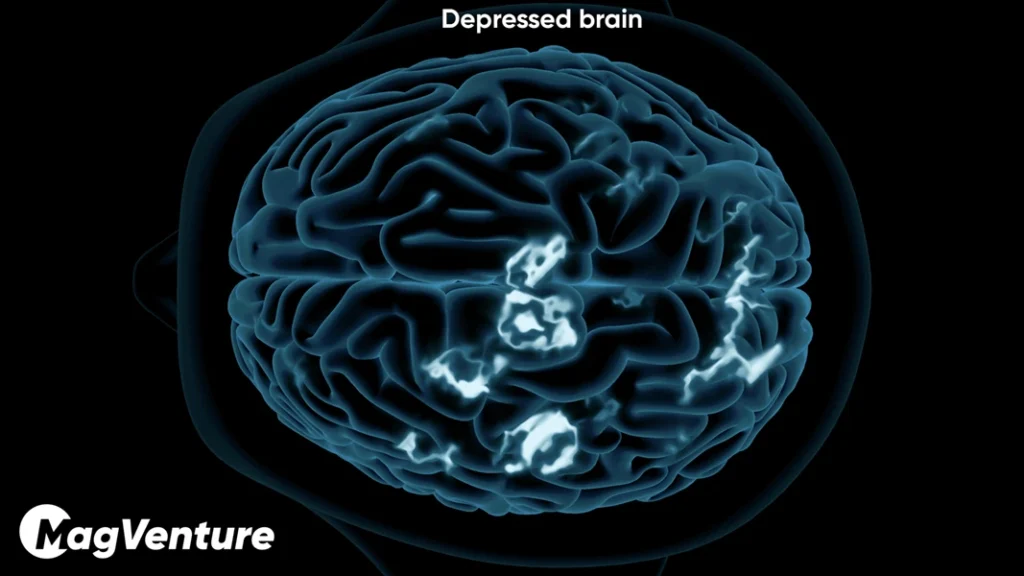
Depressed brain before TMS
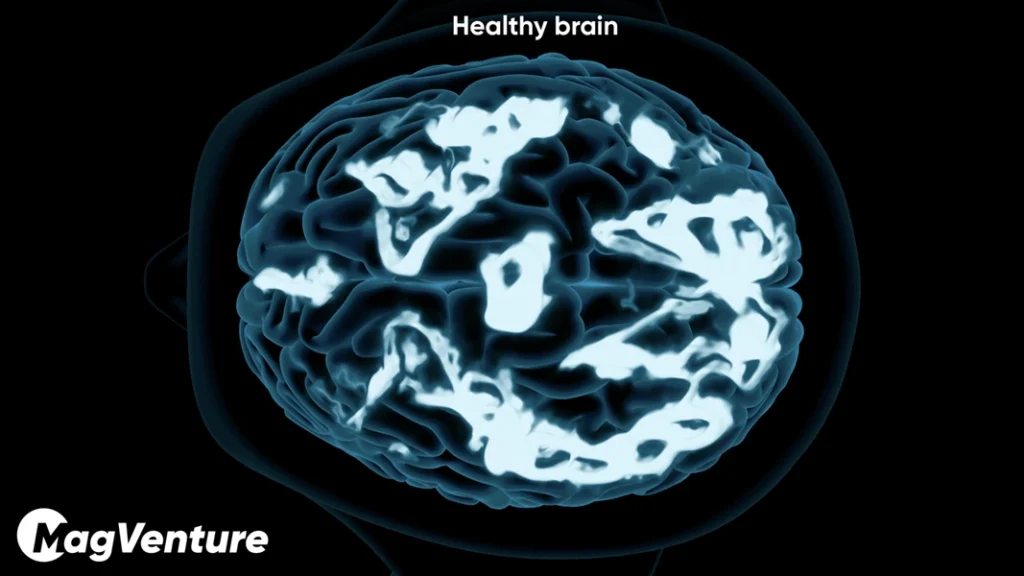
Healthy brain after TMS
How does Transcranial Magnetic Stimulation work?
During depression, the brain is not operating at full capacity in the areas responsible for emotional regulation. Signals along the neural pathways that would normally regulate moods and emotions do not work properly when a person is depressed.
TMS is non-invasive and works by sending short magnetic pulses to the areas of the brain affected by depression – stimulating and activating neural pathways to restore the emotional control center.
The TMS device uses a magnetic coil to create an electromagnetic field that delivers pulses of energy through your skull. Standard TMS treatment transmits around 3,000 pulsed stimulations in each session. These treatments stimulate neural pathways to help restore the emotional control center of the brain and ultimately resolve depression.
What happens when I have Transcranial Magnetic Stimulation?
You don’t need any sedation or anesthetic for TMS. It’s a noninvasive procedure that causes minimal discomfort. You can drive yourself to and from each treatment and go about your day afterwards.
When you attend your TMS sessions at Breakthru Psychiatric Solutions, you sit in a comfortable treatment chair while Dr. Giles positions the TMS coil over your head. She adjusts the settings to achieve the optimal energy output, which varies between patients.
When the treatment starts, you might hear clicking sounds and feel a tapping sensation on your head. It shouldn’t hurt, but you might have a slight headache afterward after the first 1-2 treatments.
With a traditional TMS protocol, you need to undergo TMS treatments five times a week for 6 weeks and then have 6 additional sessions that are tapered over 3 weeks. You will likely start to notice improvement in your symptoms by the 4th week. Your family and friends often notice improvement in you sooner.
Breakthru Psychiatric Solutions also offers accelerated TMS or one-day TMS (ONE-D) for faster results. Accelerated TMS is a two-week protocol, with 4 treatment sessions taking place every day. ONE-D is 20 treatments in one 9-hour day. While these versions of TMS are not covered by insurance, many patients choose this option for the faster results.
To find out more about transcranial magnetic stimulation and how it could help relieve your mental health condition, call Breakthru Psychiatric Solutions today or request an appointment online.
TMS for Perinatal and Postpartum Depression
About 1 in 7 women experience depression during pregnancy or after birth. TMS is a non-invasive, medication-free treatment, so nothing enters the bloodstream or passes into breast milk. Research supports TMS as a safe and effective option during pregnancy and postpartum.
Why choose Breakthru?
Schedule your consultation today to learn more about TMS.
Call or Request a Consultation
Frequently asked questions
Is TMS covered by insurance?
Traditional TMS (a 9-week protocol) is FDA approved and covered by insurance. Accelerated TMS and ONE-D TMS are not currently approved by insurance.
What are common side effects of TMS?
TMS is non-invasive and the most common side effect is a slight headache after treatment.
Can I receive TMS treatment in conjunction with IV Ketamine or Spravato?
TMS can be paired with IV Ketamine, if Dr. Giles thinks the patient’s symptoms warrant it. Insurance will not covered TMS and Spravato simultaneously.
How long am I in the clinic?
Traditional TMS treatments are typically 30 minutes/session.
Can I drive home afterwards?
Yes.
Is somebody with me for the entirety of the treatment?
Our clinical staff observes and supports our patients 100% of the time during treatments. Additionally, a physician is on-site and available at all times during treatment.